There’s nothing quite like a long drive through the UK’s breathtaking countryside, whether it’s a winding road trip or the start of a relaxing seaside holiday. But before you start packing your car or imagining salt air and sunshine, it’s important to make sure your vehicle is ready for the journey ahead.
Tyre maintenance is obviously key, but it’s also worth paying attention to other components that can directly impact their performance. For example, checking suspension bushes is crucial, as they play a key role in maintaining stable handling and reducing wear on your tyres during long drives. Polybush offer durable suspension bushes designed to enhance performance and comfort, making them a valuable addition to your car’s pre-trip checklist.
With that in mind, here are five tyre checks to prioritise before hitting the road.
Perfect Inflation
For a week or so before you go, check your inflation levels at least three times, inflating the tyres to optimum levels on the first occasion and assessing if the inflation levels remain constant during that time. If one of the tyres (or more) constantly loses pressure, you will know that there is a problem with that tyre that really should be sorted out before you travel a long distance, especially if the car will be loaded up with the whole family and their suitcases!
Speaking of inflation, while you are checking on your tyre pressure, make sure you have a hand pump in the car, especially if you will be off the beaten track and too far away for a prompt repair. Hand pumping a tyre is a hard task, but one you will be glad to do if it means that you will be able to make it to the nearest town to find a replacement rather than remain in an unknown place for hours.
Ideal Tread Depth

The legal requirement for tread depth in the UK is a uniform 1.6mm over the whole contact area of the tyre. However, many experts recommend changing your tyres when they get to around 3mm for extra safety, especially if you live in a particularly wet part of the country.
An easy way to check your tread depth is by keeping a 20p piece in the car. If you stand the coin up in the deepest part of the tread, or inside the sipe, the treads should cover the band on the outside of the coin. If you can see the band’s edge, then your treads are too low and your tyres should be promptly replaced. This is extra important if the roads you will be driving on might be of poor quality.
Check the Spare!

Surprisingly, a large percentage of drivers forget to make sure they have a spare, and those who do often forget to check that it is in good order before they set off. Being able to change a tyre is infinitely preferable to hand-pumping a tyre in order to limp to the nearest town, which might not even be possible if the tyre is too damaged.
Check the spare, make sure you have all the tools to change your tyres, if necessary, and make sure it is properly inflated and free from damage and punctures.
Look for Problems
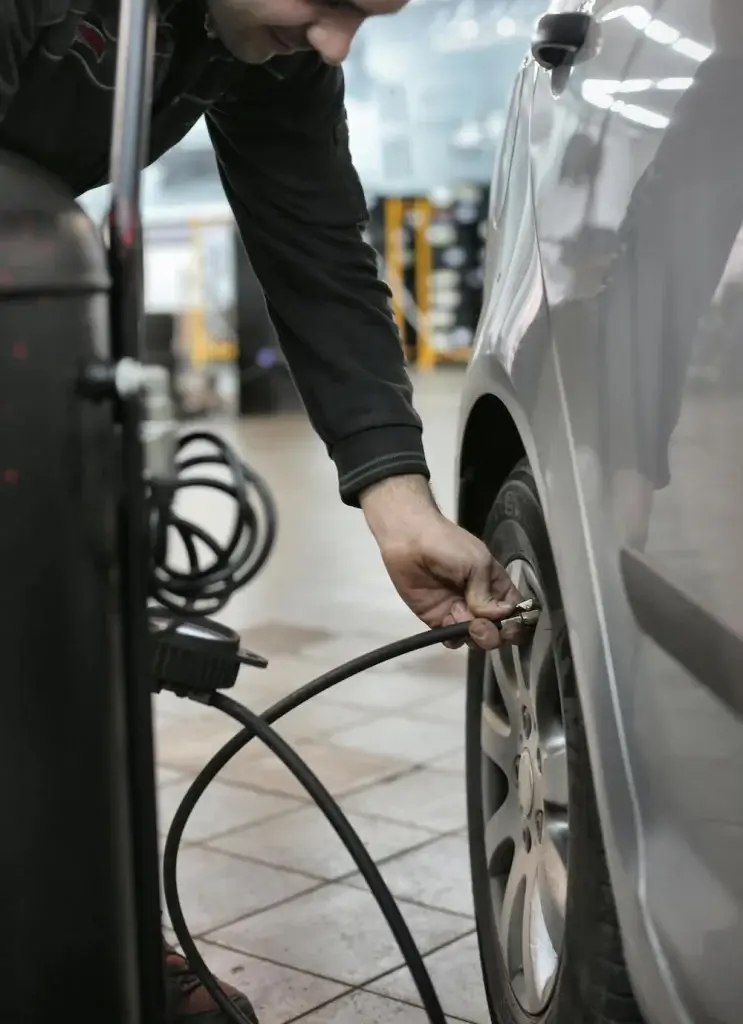
Check your tyres often, looking for signs of damage or indications of impending failure. These signs can be surprisingly subtle at first and are therefore easy to miss until they worsen enough to cause you issues while on the road. Examine the sidewalls for dimpling or bulges, check the contact area for dark spots, which could be hidden punctures, and make sure that the rubber is intact, with no missing chunks.
How Old Are Your Tyres?

Even if your tyres are in perfect condition, if they are old, they will suffer more damage than newer tyres on long drives. This is because rubber products tend to dry out and become brittle over time. While this can be very subtle, going on a long drive is an excellent way to force weaknesses and brittleness to reveal themselves.
As a rule of thumb, tyres are good for up to five years, and from there begin to decline until about ten years (which would be for tyres that are very lightly used), at which point they should be changed regardless of their apparent good condition.
Last Updated on June 30, 2025 by Lucy Clarke